

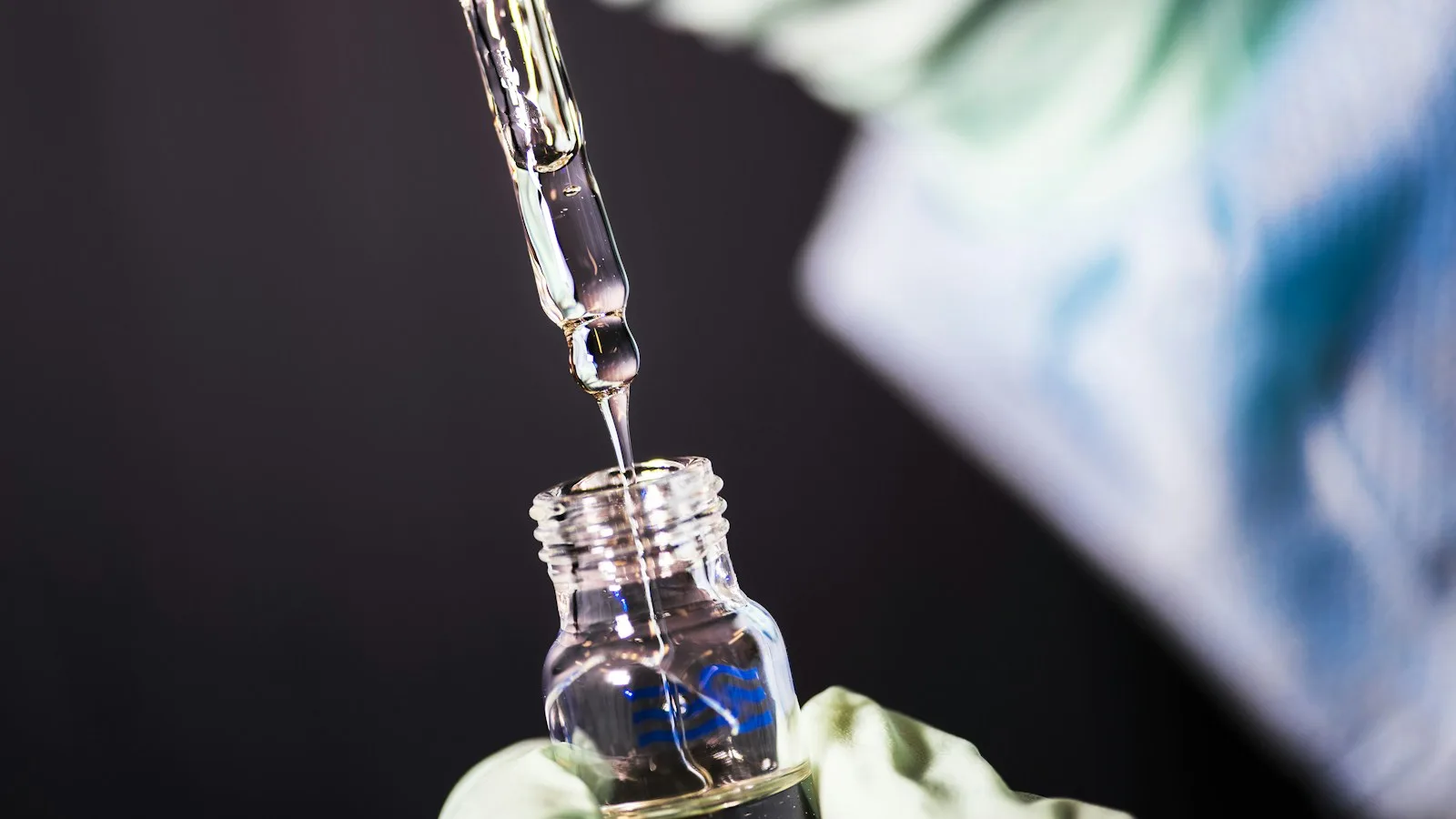
Peptide reconstitution: the basic steps for dissolving a vial calmly
Peptide vials generally arrive containing dry powder, and this form is indeed standard for peptides. Peptide reconstitution is the term for the moment that powder meets a sterile solvent. The process is simple, and it will feel calmer if you understand the basic principles first. If the term peptide still feels unfamiliar, Peptides for beginners: where to start can serve as a more general introduction.
Why the contents are powder, not liquid
Many peptides are packaged through lyophilization, or freeze-drying. This process removes almost all of the water content, because water can trigger reactions that slowly break down the molecule. In dry form, peptides are more stable to store and ship. The powder you see inside the vial is part of a well-designed storage approach.
When the vial arrives, look at the condition of the vial and its label, then match the details with the product you ordered. If there is anything you want to confirm, the Peptivia team can help answer it.
What changes once the powder meets liquid
When the powder becomes a solution, its condition changes considerably. The presence of water allows slow chemical changes such as hydrolysis, oxidation, deamidation, and aggregation. Because of that, the dry form and the solution need different kinds of attention. A more specific discussion of conditions after dissolving is available in Storing peptide vials at home.
There are several types of sterile solvent with different properties. Some contain a preservative and come in containers designed for repeated withdrawal, while others have no preservative and are intended for single use. The notes on the product page are the reference for choosing the appropriate handling.
The basic steps
- 1
Prepare everything before you start
Your work surface and hands are clean, the label has been read, and everything you need is close at hand. That way your attention stays on the vial, not on rushing the process to finish quickly.
- 2
Read the product notes one by one
Each product has its own notes. Reading them one by one means you do not have to fill in unclear parts with guesses.
- 3
Let the liquid run down the wall of the vial
Let the liquid flow slowly down the wall of the vial, instead of hitting the powder directly.
- 4
Swirl slowly until dissolved
Swirl the vial gently until the powder dissolves. Avoid shaking, because strong agitation and foam can push peptide molecules to clump together.
- 5
Note the date
Write down the date the vial was dissolved, then store it according to the notes on the product page.
The color, clarity, and physical condition of the solution are easiest to read together with the label and the related product information. Gentle handling from the start is the simplest way to protect the quality of the vial's contents.
Reading the product information
Retatrutide and several other peptides are materials under study, and clinical trials are still ongoing. A guide to reading peptide product information explains how to read peptide product information in more detail.
Details on products such as Retatrutide, NAD+ and Glutathione, including their storage notes, are available in the Peptivia catalog. You can send questions about the products through Peptivia's official WhatsApp.